
 Language
 English
 Español
 русский
 Português
 عربى

How to Choose a Food Packaging Manufacturer: A Practical Buyer's Guide
Oct 23,2026Most people who search for a food packaging manufacturer are not really shopping for a name. They already have a product, a launch date, and a filling line that only works with certain pouch dimensions. What they actually need is a supplier who can answer three questions quickly: can you make this structure, can you hold the barrier we need, and can you deliver on schedule without the print drifting between runs.
We have been making flexible packaging in Huaian since 2003, so we have watched these projects go smoothly and we have watched them go sideways. What follows is close to the conversation we have with a new buyer in the first meeting, and it is written in the order the questions usually come up.
Content
- 1 What a Food Packaging Manufacturer Actually Does
- 2 Start With the Food, Then Choose the Structure
- 3 Matching the Bag Format to Your Filling Line
- 4 Food-Grade Is a Process, Not a Checkbox
- 5 Where Flexible Packaging Fits in the Food Aisle
- 6 Sustainability Without the Slogan
- 7 Questions Worth Asking Before You Commit
What a Food Packaging Manufacturer Actually Does
A food packaging manufacturer is usually a converter. We do not make the resin or the aluminium foil. We take films, foil, paper and coatings and turn them into a finished pouch, a printed roll, or a lidding material. For flexible packaging, that means a chain of steps: blowing or sourcing film, printing the graphics, laminating the layers together with adhesive, slitting to width, and then bag making or rewinding.
That chain matters more than buyers expect, because most quality problems start between the steps rather than inside them. A print that looks flawless on the reel can fail a seal test if the lamination adhesive was applied too heavily. A pouch that seals perfectly on a lab machine can wrinkle on your vertical form-fill-seal line if the film's coefficient of friction is slightly off. The narrower the gap between printing, laminating and bag making, the easier it is to trace a fault back to its source.
Our own plant runs more than 60 automatic plastic colour printing lines, with blown film capacity of 6,000 tonnes a year and colour printing output of around 10,000 tonnes a year. When you are comparing suppliers, this is the kind of detail worth asking about directly: whether film blowing, printing and lamination happen under one roof, or whether your order passes through three companies before it reaches you.
Start With the Food, Then Choose the Structure
The material structure should be a consequence of what is inside the bag, not a decision made from a catalogue. Four things drive almost every specification: how much oxygen the food can tolerate, how much moisture it can lose or absorb, whether light degrades it, and whether fat or oil will attack the seal layer. Shelf life, distribution temperature and the format of your filling line then narrow the options further.
The table below is a starting point for that conversation rather than a specification. Two products that look similar on a shelf can need very different laminates once you account for storage conditions and the way the pack is handled.
| Structure | Barrier character | Foods that commonly use it | What to watch |
|---|---|---|---|
| PET / PE | Moderate moisture, limited oxygen | Biscuits, dried fruit, short-shelf snacks | Excellent print surface, but not suited to boiling or retort |
| PET / MPET / PE | High light and oxygen barrier, metallised | Coffee, confectionery, savoury snacks | Sharp creases can crack the metallised layer and open a leak path |
| PET / AL / PE | Very high moisture, oxygen and light barrier | Powdered mixes, coffee, dry premium goods | Foil fractures on tight folds, so pack geometry matters |
| PET / AL / CPP | Very high barrier with heat resistance | Ready meals, retort foods, sauces | Needs retort-grade cast polypropylene and a validated seal |
| Paper / AL / PE | High barrier with a paper hand-feel | Soup powders, tea, instant coffee | Paper edges absorb moisture, so storage and handling need care |
| Mono-PE or mono-PP | Moderate barrier, designed for recycling | Dry snacks, confectionery, some bakery | Narrower heat-seal window and often slower line speeds |
Process conditions deserve the same attention as shelf life. If your product is filled hot, sterilised after sealing, or cooked in the pack, the structure has to survive temperatures that would destroy an ordinary laminate. A retort pouch is a good example: the seal layer, the adhesive and the printing all have to tolerate the same cycle, and the seal itself needs to be validated rather than assumed.
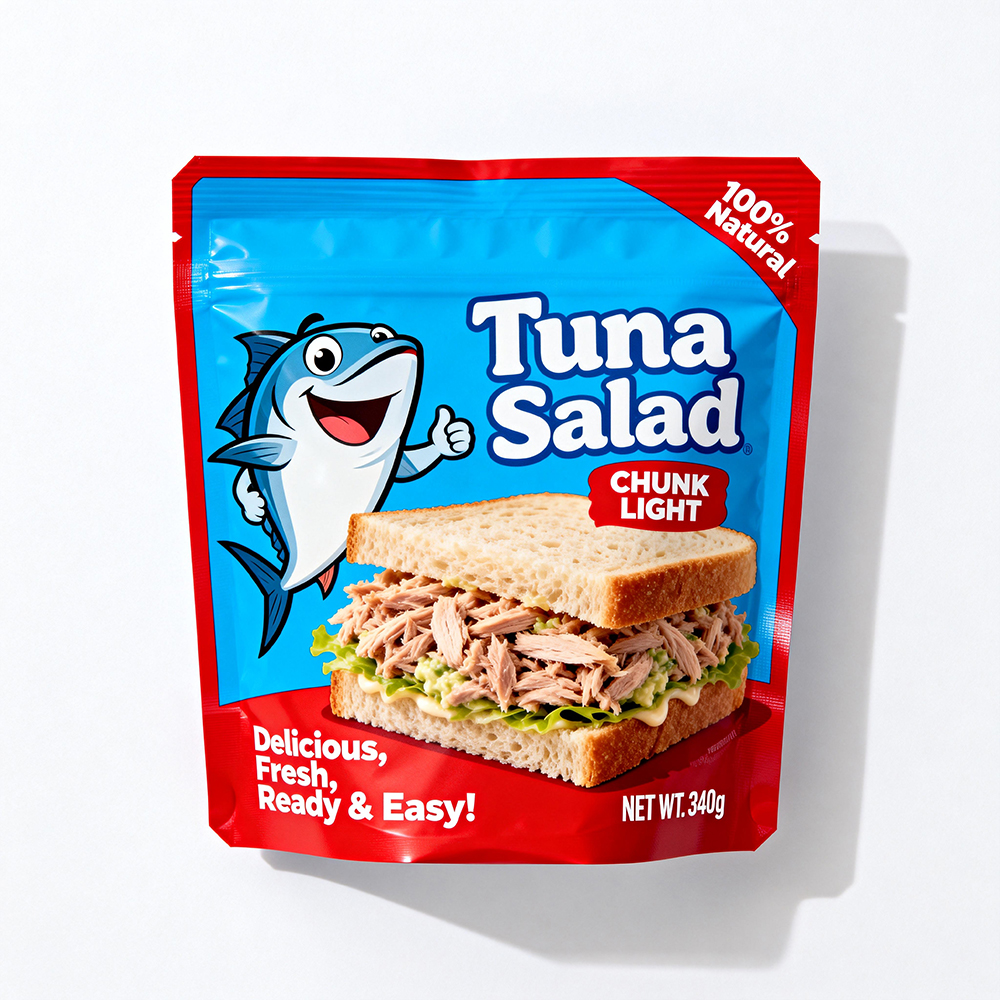 High-Temperature Retort Pouches for Sterilized Meat and Pet FoodRetort pouches built for 121–135°C sterilization cycles, with seal integrity and barrier retention after processing for meat and pet food.View Product →
Matching the Bag Format to Your Filling Line
Bag format is where packaging and production meet, and it is the part buyers most often lock in too early. A stand-up pouch that displays beautifully on shelf may run poorly on a machine set up for three-side seal sachets, and a spout pouch adds a fitment that your filler has to be able to weld cleanly.
| Format | Typical filling | Good fit for | Points to check |
|---|---|---|---|
| Three-side seal | Horizontal form-fill-seal | Single servings, sachets, powders | Limited volume and a smaller printable face |
| Stand-up pouch | Pre-made pouch fillers | Snacks, coffee, nuts, pet treats | Bottom gusset strength under stacking load |
| Spout pouch | Pre-made with fitment welding | Sauces, purees, liquid concentrates | Fitment compatibility with your filler head |
| Eight-side seal | Pre-made pouch fillers | Premium coffee, gifting, dry goods | Flat, squared presentation limits shaping options |
| Roll film | VFFS on your own line | High-volume snacks, frozen goods | Film stiffness, friction and COF on your machine |
| Bag-in-box aseptic | Aseptic filling | Juices, dairy alternatives, liquid food | Sterilisation route and barrier loss at the fitment |
Stand-up pouches are usually the first format we discuss with a food brand, because they balance shelf presence with efficient filling and reasonable material use. The useful question is not whether they look good, but whether the bottom gusset will hold its shape when a case of 24 is stacked on a pallet for three months.
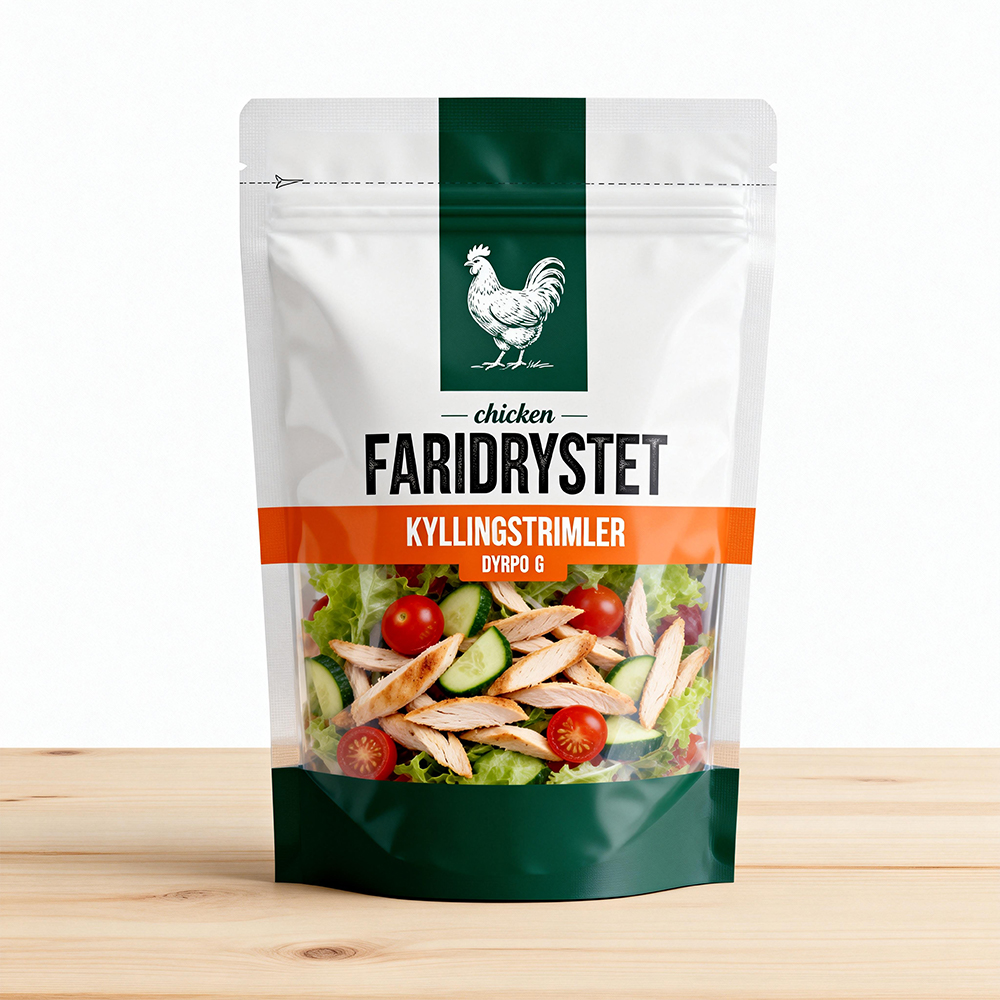 Custom Stand-Up Pouches for Premium Retail Food and Consumer BrandsStand-up pouch format with high-barrier options, resealable zippers and wide print area, suited to shelf display and efficient filling.View Product →
Food-Grade Is a Process, Not a Checkbox
Many suppliers will tell you their material is food grade. Fewer will explain how they keep it that way. The relevant questions are about inks, adhesives, solvent retention and hygiene zones: which ink system is used, how residual solvents are controlled after printing and lamination, whether the printing hall is separated from the bag-making hall, and how a finished lot can be traced back to the film batch and the press run.
Migration is the part that catches people out. A laminate can pass every mechanical test and still be unsuitable if the adhesive or ink contains components that transfer into fatty or acidic foods under the intended storage conditions. That is why a declaration of compliance and migration data should be part of the conversation before artwork is approved, not after the first pallet ships.
We wrote a longer piece on what food-grade really means in practice, including the difference between a material certificate and a finished-pack validation. It is worth reading before you sign off a specification.
Where Flexible Packaging Fits in the Food Aisle
Food is broad, and a manufacturer who is excellent at dry snacks may not be the right partner for a retort-ready meal. The practical split usually looks like this:
- Dry goods: nuts, coffee, snacks, cereals, powdered drinks and additives, where moisture and oxygen control drive the structure.
- Heat-processed foods: retort meals, soups, sauces and pasteurised products, where the seal layer and the process cycle dominate.
- Chilled and frozen: meat, seafood, prepared foods and frozen vegetables, where puncture resistance and freezer burn control matter.
- Liquids and semi-liquids: beverages, concentrates, purees and condiments, often in spout or bag-in-box formats.
- Ingredients and additives: flavourings, thickeners and functional powders sold business to business.
If you are mapping your own product against these categories, our food industry overview is a reasonable place to start, because it groups formats by product type rather than by material alone.
Sustainability Without the Slogan
Almost every packaging conversation now includes a question about recyclability, and the honest answer is that it depends on the structure and on where the pack will be sorted. Mono-material designs using a single polymer family are easier to recycle in stream, but they usually give up some barrier or run at slower line speeds, so the shift has to be tested rather than declared.
The other levers are less visible but often more effective: reducing gauge where the seal and strength allow, cutting trim waste, and recovering solvent and heat inside the plant. Our own site runs on solar lighting, heat recovery, water circulation and organic waste-gas treatment, which does not make a pouch recyclable but does change what it costs to produce one.
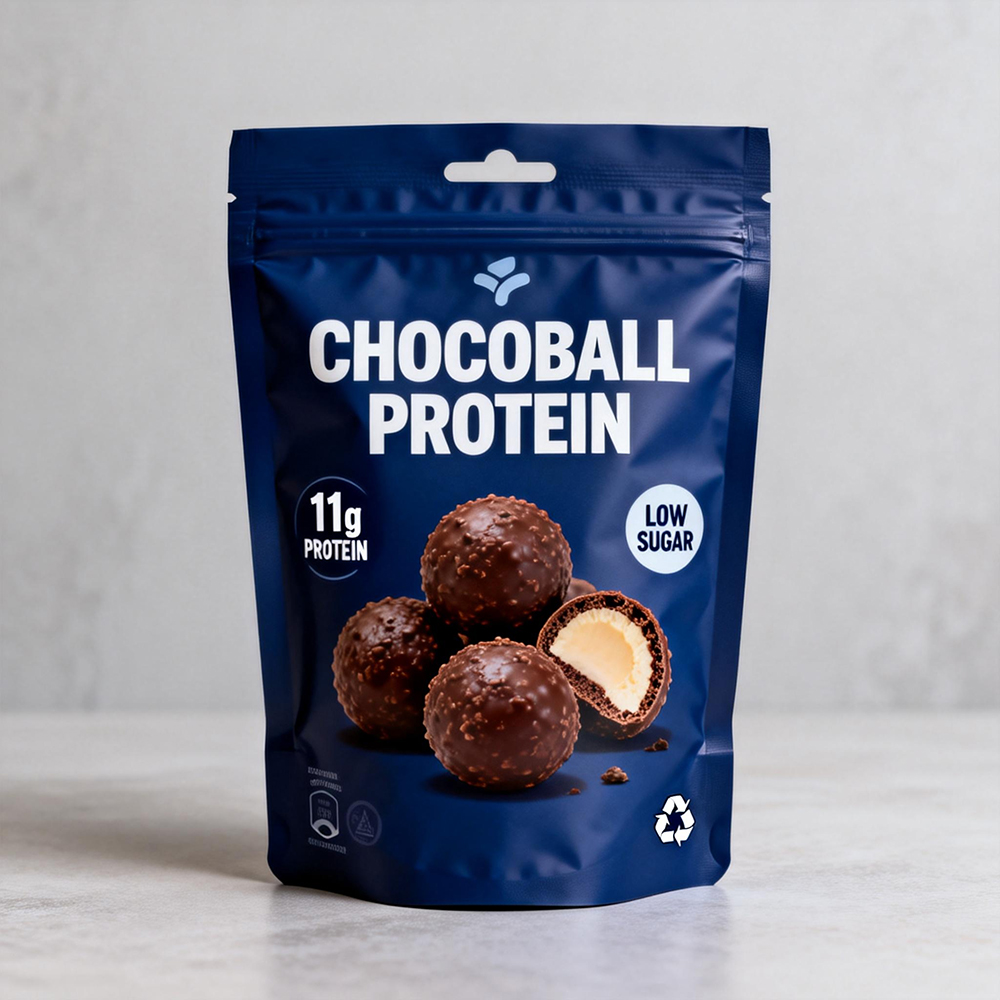 Recyclable Mono-Material Flexible Packaging for Snacks and Pet FoodSingle-material PE/PE or PE/PP structure designed to combine recyclability with barrier and heat-seal performance for everyday flexible packaging.View Product →
Questions Worth Asking Before You Commit
If you take one thing from this guide, take this list into your next supplier call. The answers tell you more than any brochure.
- Which layers will actually be in my structure, and what is each one doing?
- What shelf life and storage conditions did you validate this laminate against?
- Can I see a declaration of compliance and migration data for the finished pack?
- What are your tolerances on print registration, seal width and bag dimensions?
- How do you handle colour approval: drawdown, press proof, or a physical sample from the production run?
- What is the minimum order quantity, and how does it change between stock and custom structures?
- Who runs the trial on my filling line, and what happens if the film does not perform?
- What is a realistic lead time from artwork approval to delivery, and what usually causes slippage?
None of this is complicated, but it is easy to skip when a launch date is close. In practice, the projects that run smoothly are the ones where the structure, the format and the compliance documents were settled before the artwork was finalised, and where the converter saw a sample of the actual product rather than a description of it.
If you are at that stage now, send us the product, the target shelf life and the filling method. We will come back with a proposed structure, a format recommendation and a realistic timeline, and if something in your brief looks risky, we will say so early rather than after the plates are engraved.
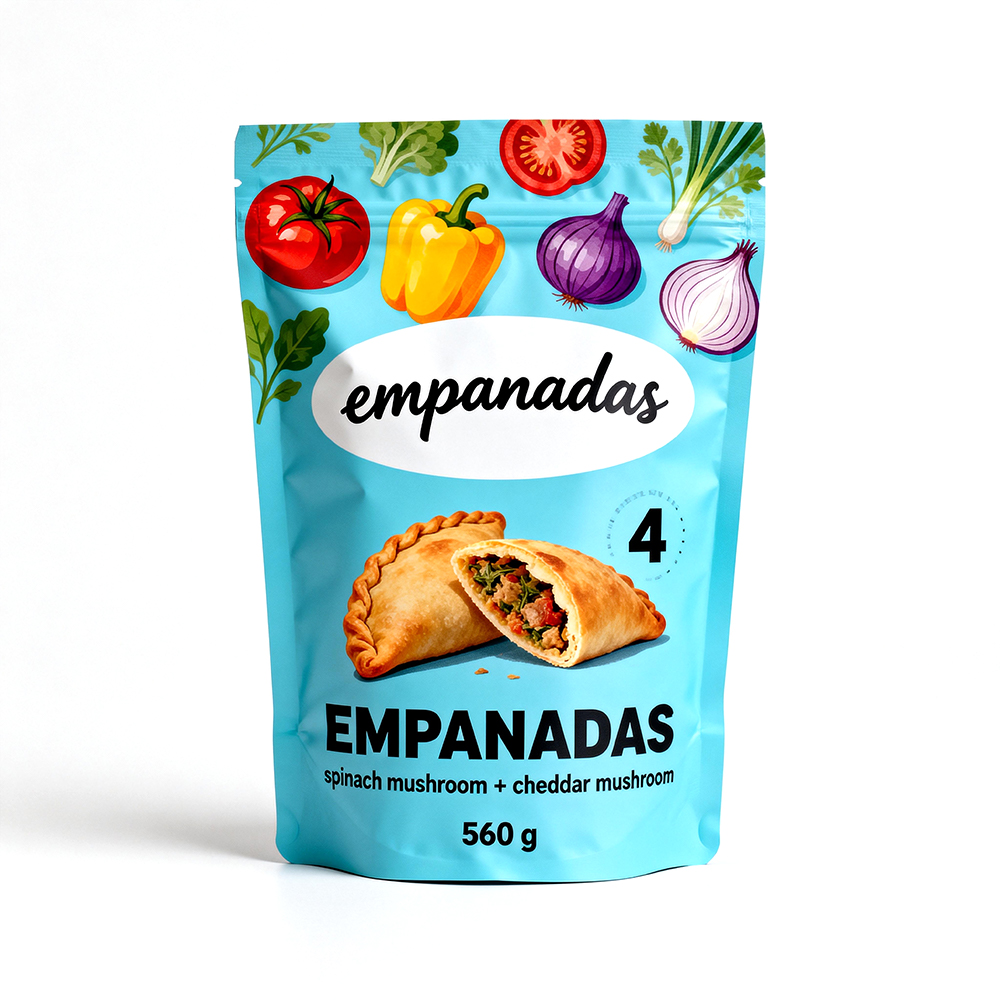
-
 Market
-
 Function
-
 Bag-Shaped
-
 Material


Get a Quote

 Email: admin@zhongdepack.com
 Stephanie: +86 15150585909
Eva: +86 18652312560
Sherlock: +86 15188766848 Monday-Friday: 9am to 6pm
-
 No. 10, Lixi Road, Economic and Technological Development Zone, Huai'an City, Jiangsu Province, China.
Copyright © by Huaian Zhongde Packaging Materials Co., Ltd. All Rights Reserved.
Custom Printed Fexible Packaging Manufacturer