
 Language
 English
 Español
 русский
 Português
 عربى

Aluminium Foil Pouch Guide: Structure, Barrier Performance, and Selection
Oct 16,2026Walk down almost any supermarket aisle and you are surrounded by them: coffee bags, nut pouches, soup sachets, medical test kits, wet-wipe refills. A large share of those packages are aluminium foil pouches — flexible laminates built around an ultra-thin layer of aluminium that behaves like a solid wall against moisture, oxygen and light.
We have been manufacturing flexible packaging for more than two decades, and the questions buyers ask about foil pouches are remarkably consistent. What is actually inside the laminate? How good is the barrier in real life? Which structure suits my product, and which one is simply more expensive than I need? This article answers those questions in plain language, without the sales talk.
Content
- 1 What an Aluminium Foil Pouch Actually Is
- 2 Inside the Laminate: What Each Layer Does
- 3 Barrier Performance in Plain Language
- 4 Common Foil Pouch Structures and What They Suit
- 5 Pouch Styles That Work With Foil
- 6 Where Aluminium Foil Pouches Show Up
- 7 Retort, Pasteurisation and Frozen Applications
- 8 Pure Aluminium Versus Metallised Films
- 9 What to Have Ready Before You Ask for a Quote
- 10 A Few Words on Sustainability
What an Aluminium Foil Pouch Actually Is
A foil pouch is not kitchen foil folded over. It is a laminate: an aluminium foil core bonded between an outer print film and an inner heat-seal film, sometimes with additional layers for strength or stiffness. The foil itself is thin — most high-barrier pouches use a layer somewhere between 7 and 9 microns — but because it is continuous and free of pinholes at that thickness, it delivers a barrier that no single plastic film can match.
The practical benefit is that the finished pouch stays flexible. It can be printed in full colour, shaped into a stand-up bag or a spouted sachet, and filled and sealed on standard form-fill-seal equipment. That is the real reason foil pouches show up in so many different product categories: rigid performance in a soft, lightweight package.
Inside the Laminate: What Each Layer Does
Every structure is a small team of materials, and each member has a specific job.
The outer layer
Usually PET or BOPP, this layer carries the printed design, protects it from scuffing and rubbing during transport, and provides enough heat resistance to survive the sealing jaws without melting or distorting.
The aluminium core
This is the barrier layer. It blocks moisture, oxygen, light and aroma almost completely, and it is also what gives the pouch its distinctive silver backing when the print is not fully opaque.
The inner sealant layer
Polyethylene or cast polypropylene sits on the product side. It is the layer that actually seals to itself, and it is also the layer that decides how much heat the finished pouch can take. A PE sealant is fine for dry goods and pasteurised products; a CPP sealant is what you need when the pouch will go through a retort cycle.
Adhesive or extrusion layers hold the stack together, and they matter more than most buyers expect — a weak bond shows up as delamination after a few months on the shelf, not on the day of filling.
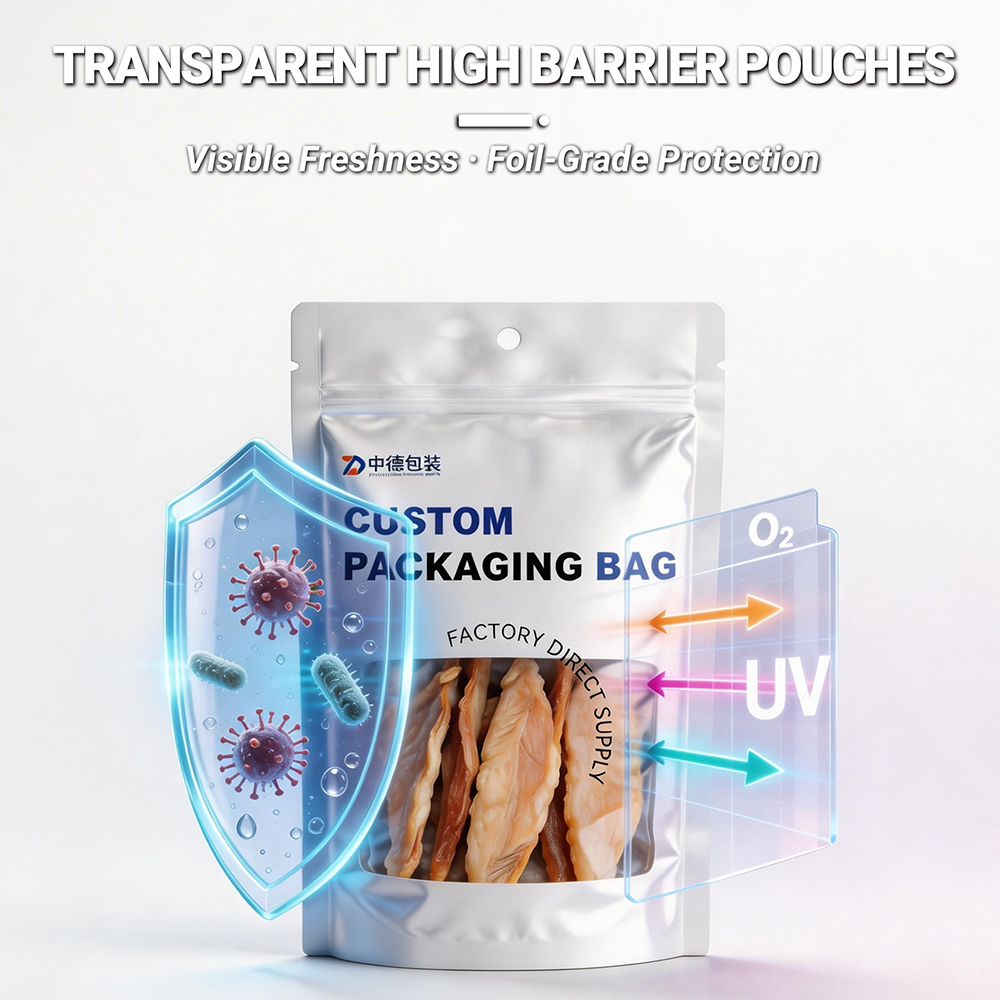
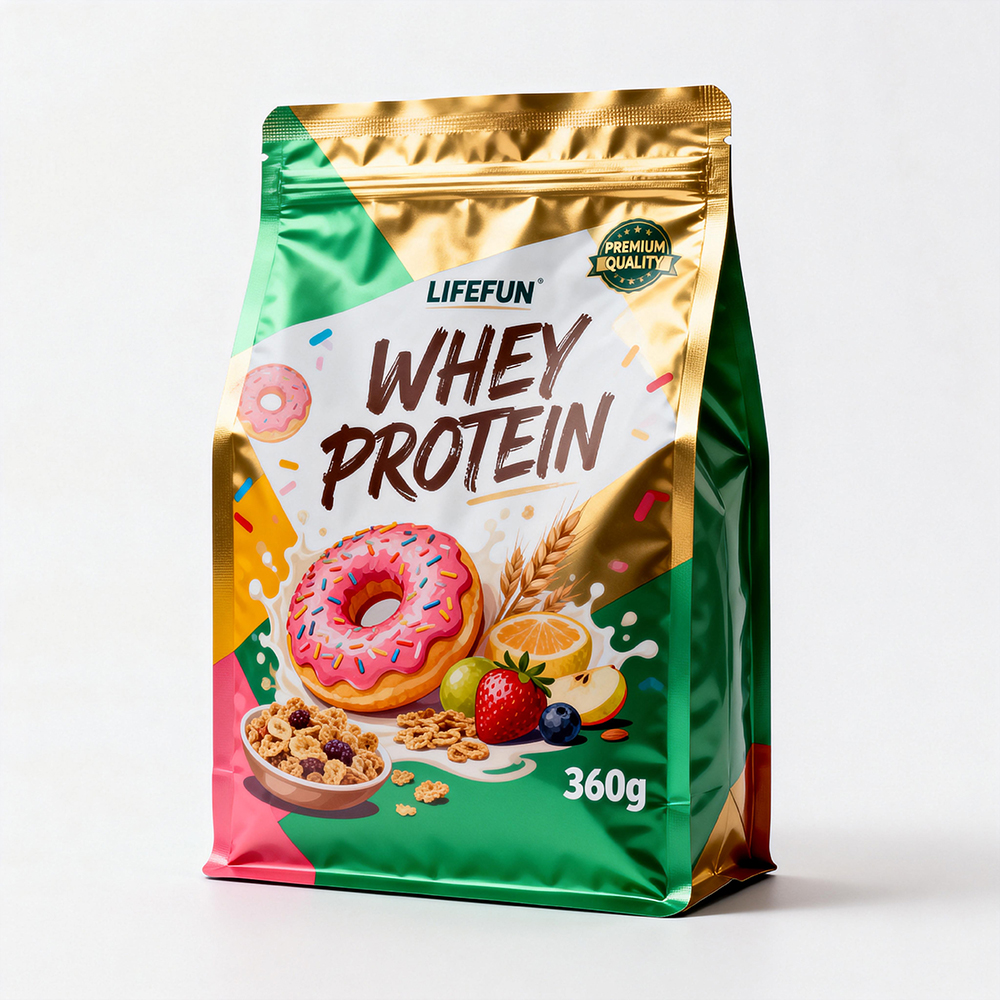 High Barrier Foil Pouches for Sensitive ProductsCustom aluminum foil pouches block oxygen, moisture and light; varied thicknesses and widths help specifiers choose for sensitive high-value products.View Product →
We build these high-barrier configurations across a wide range of thicknesses and widths, so if you are unsure where to start, that range is usually the quickest place to get a feel for what is available.
Barrier Performance in Plain Language
Two numbers define how well a pouch protects its contents: the oxygen transmission rate and the water vapour transmission rate. For a well-made foil laminate, both sit close to zero. That is why foil pouches are chosen for products that go stale, oxidise, clump, or lose their aroma quickly.
The foil handles the barrier. What remains is the seal, the folds, and any pinholes created during converting or filling. A foil layer under roughly 6 microns can develop micro-pinholes, which is why we rarely recommend going thinner than 7 microns on a product that genuinely needs protection. If you would like a deeper look at how barrier films are specified, our article on the basics of barrier films walks through the same principles in more detail.
Light protection is the other quiet benefit. Fats, oils, vitamins and certain pigments degrade under UV and visible light, and an opaque foil layer removes that variable entirely from your shelf-life calculation.
Common Foil Pouch Structures and What They Suit
The table below covers the structures we are asked for most often. Treat it as a starting point rather than a rulebook — the right answer always depends on your product, your filling line and the conditions your package will meet between the factory and the customer.
| Structure | Inner sealant | Heat resistance | Typical uses |
|---|---|---|---|
| PET / AL / PE | PE | Pasteurisation up to about 100 °C | Coffee, nuts, snacks, powders, dried fruit |
| PET / AL / CPP | CPP | Retort up to about 121 °C | Ready meals, soups, sauces, wet pet food |
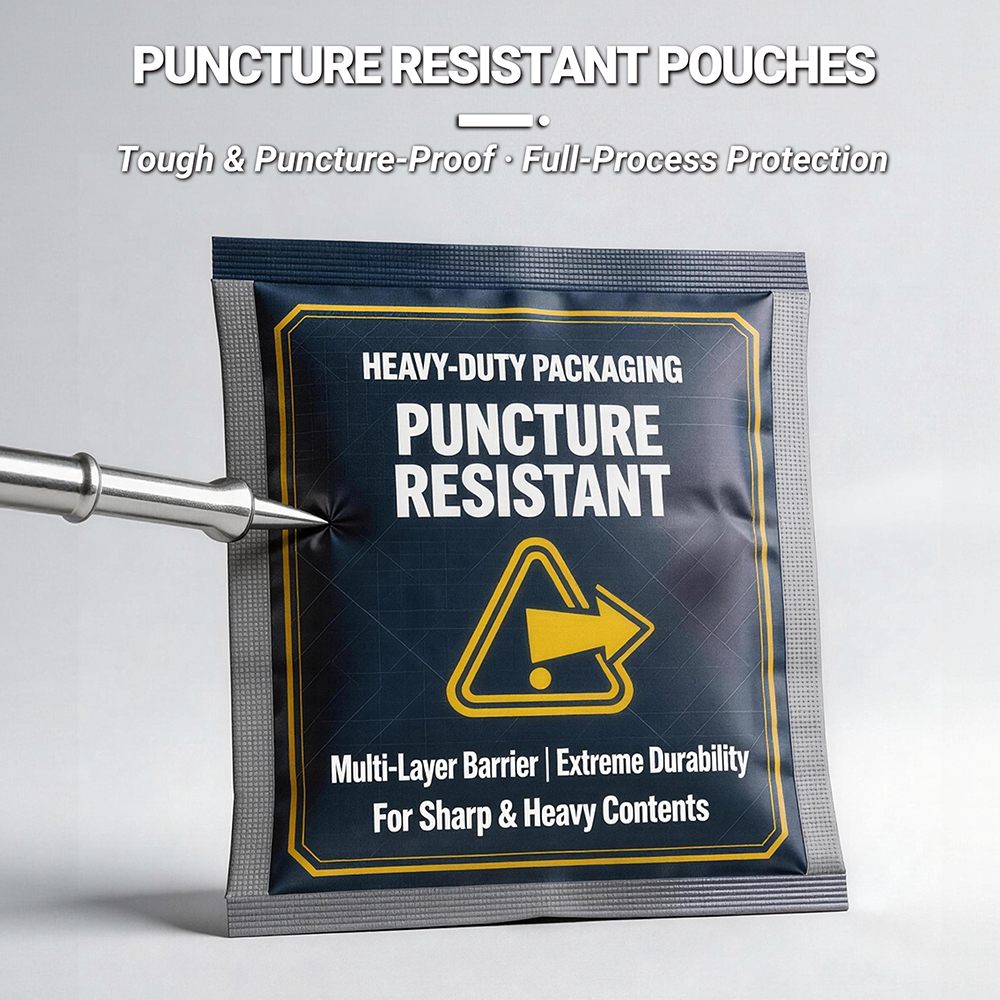
| PET / NY / AL / CPP | CPP | Retort with added puncture resistance | Seafood, bone-in products, bulk liquids |
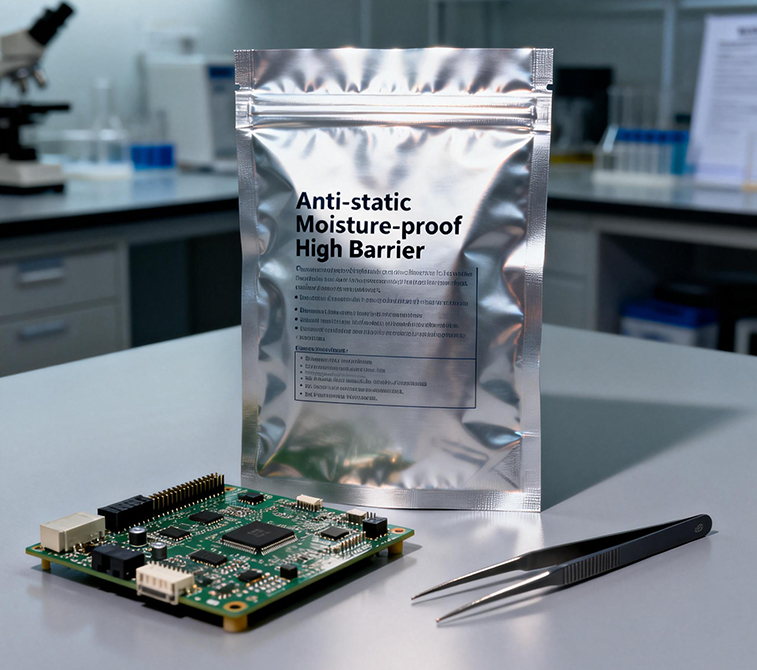
| PET / AL / PET / PE | PE | Moderate | Medical devices, reagents, agrochemicals, electronics |
| Paper / AL / PE | PE | Moderate | Tea, chocolate, premium dry goods |
| PET / VMPET / PE | PE | Moderate | Cost-sensitive dry goods (metallised, not foil) |
Pouch Styles That Work With Foil
Foil laminates can be converted into most common flexible formats, and the choice usually comes down to how the product is filled and how it should look on the shelf.
- Stand-up pouches, which give good shelf presence and work well for coffee, pet treats and snacks.
- Three-side seal and four-side seal sachets, the workhorses for single servings, samples and powders.
- Centre-seal and folded bags, often used for larger fill weights and bulk formats.
- Spouted pouches, which suit liquids, purees and semi-solid products.
- Roll film, for customers who run their own form-fill-seal lines in-house.
- Shaped and irregular pouches, where the printed outline itself becomes part of the branding.
Where Aluminium Foil Pouches Show Up
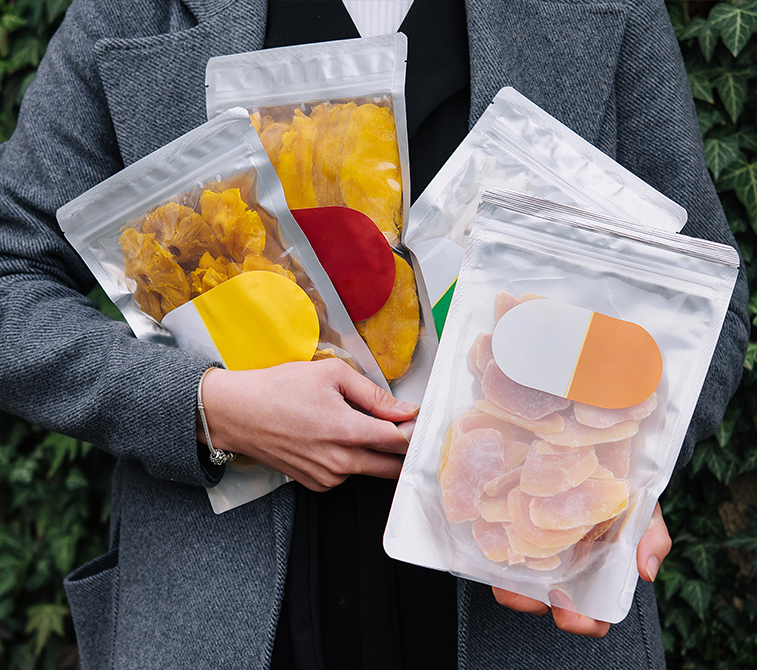
Food remains the largest application by far, and within it the patterns are predictable: coffee and tea, where aroma retention is everything; nuts and dried fruit, where rancidity is the enemy; seasonings, soup bases and food additives, where moisture turns powder into a brick; and meat, seafood and prepared meals, where the package may need to survive a cook cycle as well.
Outside food, foil pouches appear wherever moisture or oxygen causes real damage. Medical device and diagnostic reagent packaging, cosmetic and face mask sachets, wet wipes, veterinary products, seed and powder pesticide packaging, lithium battery materials, and electronic components all rely on the same basic barrier logic. If your product sits in one of these categories, our overview of packaging by industry may help you see how similar products are usually handled.
Retort, Pasteurisation and Frozen Applications
Retort is where foil earns its keep. A pouch built with a CPP sealant and a suitable outer structure can be sterilised at around 121 °C, which means a shelf-stable ready meal or a portion of wet pet food can be packed, cooked and stored without refrigeration. Compared with a can or a glass jar, the pouch heats faster because it is thinner, and it takes far less energy to ship.
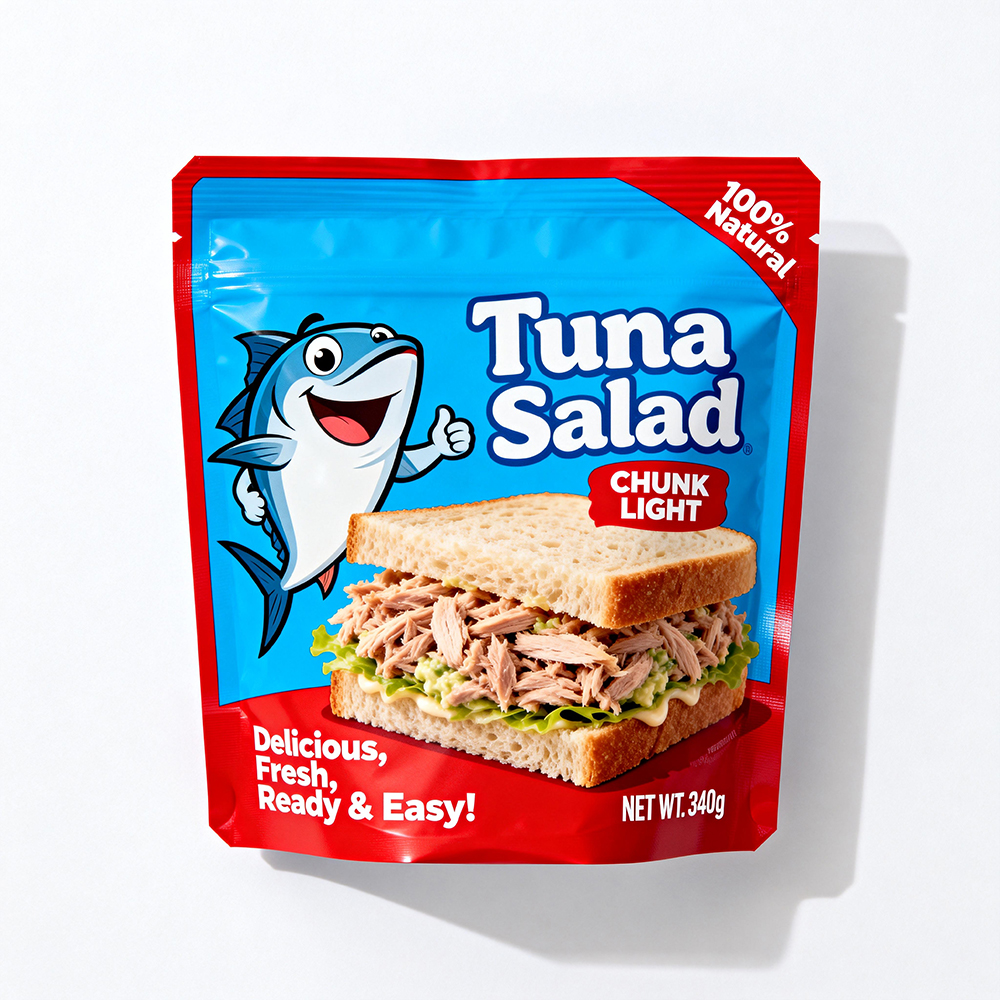 High-Temperature Retort Pouches for Sterilized FoodsNylon and CPP construction withstands 121–135°C retort sterilization, supporting shelf-stable ready meals and wet pet food without refrigeration.View Product →
Pasteurisation below 100 °C is a gentler version of the same idea and is often enough for sauces and deli products. Frozen applications are different again: the priority shifts to flexibility at low temperature and resistance to puncture from sharp edges or ice crystals.
Pure Aluminium Versus Metallised Films
Metallised film — a vacuum-deposited aluminium coating on PET — is a legitimate option and costs less than a true foil laminate. It improves barrier performance noticeably and looks similar on the shelf. What it cannot do is match genuine foil, particularly at high humidity, where the thin coating is more vulnerable. For products with a long shelf life, or for anything that must survive retort, a real foil layer is usually the more reliable choice.
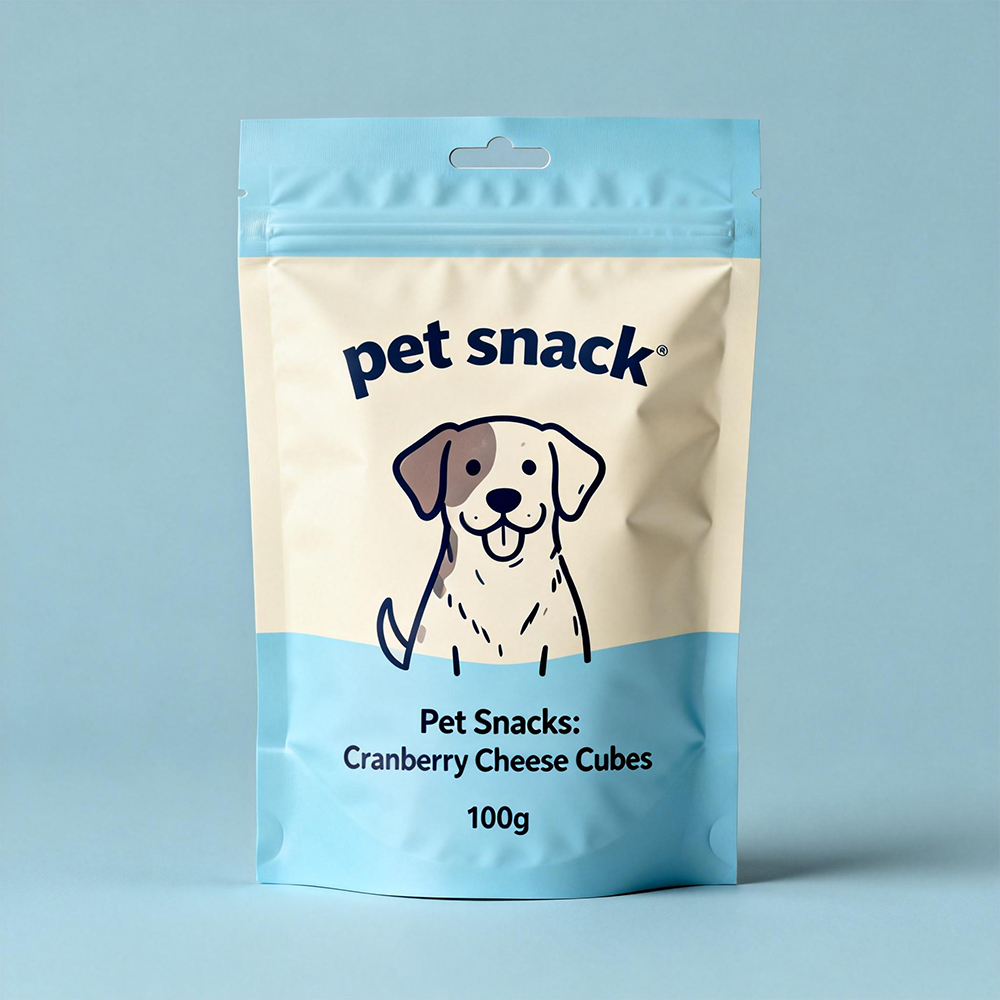 Pure Aluminum Packaging for High-Barrier ProtectionHigh-purity foil bonded with PET and NY films blocks light, oxygen and moisture, and handles 121–135°C retort for demanding products.View Product →
When the application sits between the two, the honest answer is that we test rather than guess. A short shelf-life trial on both structures tells you more than any specification sheet.
What to Have Ready Before You Ask for a Quote
Conversations move much faster when these details are on the table from the start:
- The product and its fill weight, including whether it is powder, liquid, paste or solid.
- Any process the package must survive — retort, pasteurisation, freezing, microwaving.
- Target shelf life and the storage conditions it covers.
- Whether the pouch will be filled on your line or ours, and on what type of machine.
- Closure preference: standard seal, zipper, spout, valve or easy-peel opening.
- Print requirements, including artwork status and any regulatory labelling rules.
- Annual volume and expected order pattern, which affect both tooling and price.
None of these need to be final. A rough figure is far more useful than a blank.
A Few Words on Sustainability
Foil laminates are multi-material by nature, which makes them harder to recycle than a single-material pouch. That is a genuine trade-off, not something to gloss over. Where a product does not need an absolute barrier, a mono-material structure can often do the job and is easier to recover. Where it does, keeping the foil layer as thin as the performance allows — and reducing total material weight — is the most practical improvement available. We look at both routes with customers rather than pushing one answer.
If you are working through a packaging decision, the fastest way forward is usually a short conversation about the product and the conditions it has to survive. Send us the details, and we will come back with a structure, a rough price and an honest view on whether foil is really what you need — or whether something simpler will do just as well.
-
 Market
-
 Function
-
 Bag-Shaped
-
 Material


Get a Quote

 Email: admin@zhongdepack.com
 Stephanie: +86 15150585909
Eva: +86 18652312560
Sherlock: +86 15188766848 Monday-Friday: 9am to 6pm
-
 No. 10, Lixi Road, Economic and Technological Development Zone, Huai'an City, Jiangsu Province, China.
Copyright © by Huaian Zhongde Packaging Materials Co., Ltd. All Rights Reserved.
Custom Printed Fexible Packaging Manufacturer